


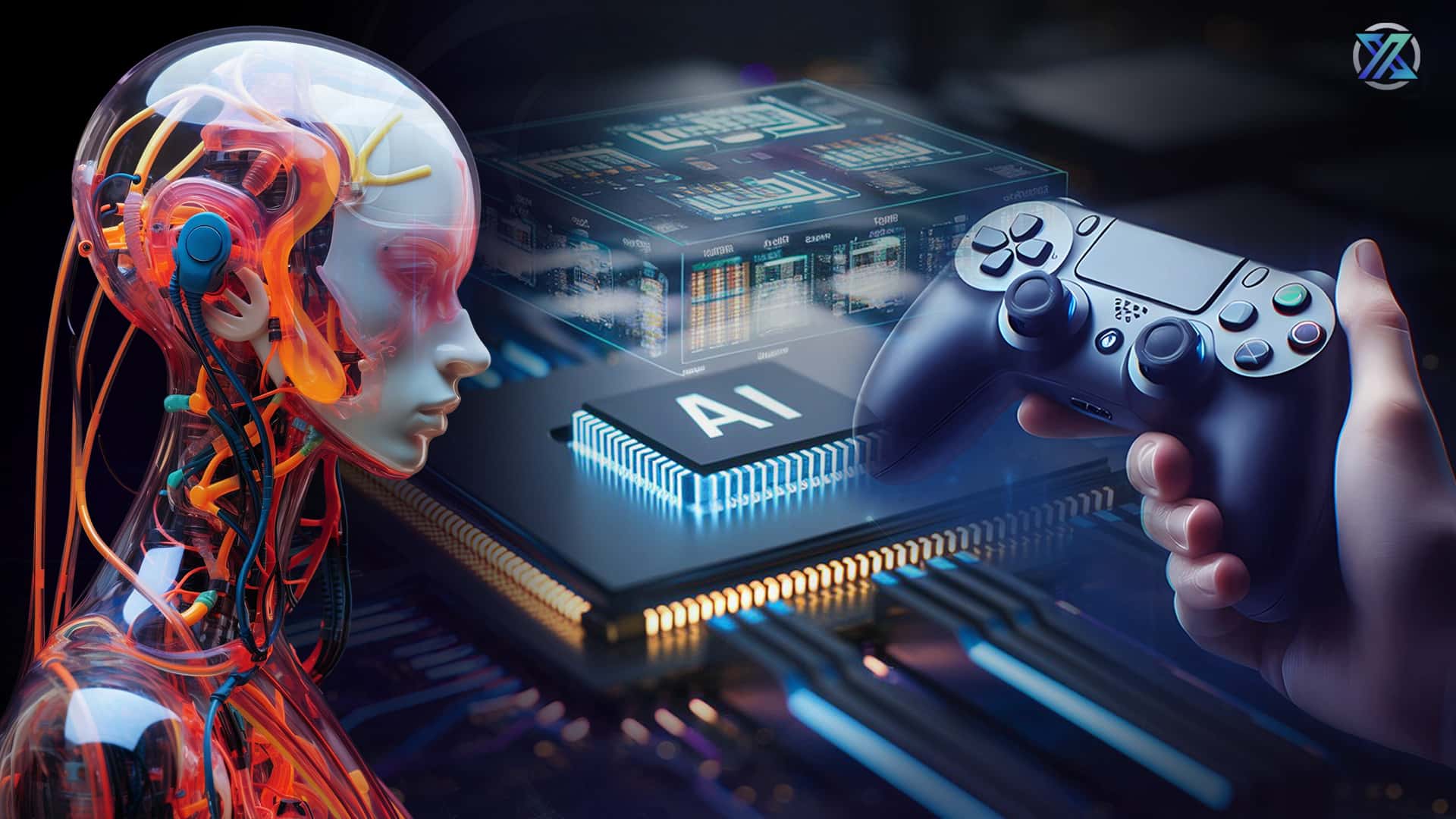
The PC hardware market has always been tough to predict, but in the last two years, it has been as if a roller coaster without brakes was the only option. All the people who play games, do creative works, and buy computers for daily use have remarked the above-mentioned prices of RAM, SSD, and GPUs, trifecta of modern gaming or productive machines components. The prices increased greatly and this fact was attributed to the usual factors: supply chain disruptions, silicon shortages, and crypto mining; however now surprisingly a new factor has been introduced that completely demolished the previous, Artificial Intelligence.
AI is not only revolutionizing our lives by changing the way we work, communicate, and entertain ourselves but is also the driving force behind the hardware industry's makeover. And the bad news for consumers is that this AI-oriented transition has resulted in price increases for several component categories. But the question is, what makes AI the primary factor? How has the price of GPU escalated to that of an entire desktop? Why is RAM so costly now even though the capacities are more or less the same? And what actually happened to SSDs which had been witnessing a continuous decline in their prices every quarter?
Let’s unravel the saga of increased costs first and then proceed to see the market’s direction through AI’s influence, which ultimately leads to understanding the position of gamers and PC builders regarding the future.
The AI Boom and Its Insatiable Demand for Hardware
The computational power needed for Artificial Intelligence, particularly in the case of large language models (LLMs), machine learning workloads, and real-time inference systems, is huge. This kind of hardware is not made of consumer-grade components but rather consists of industry-grade GPUs, specialized accelerators, ultra-fast memory, and enterprise-class storage.
The issue is clear-cut yet severe for the consumer market :
The very firms that have been supplying consumer RAM, SSDs, and GPUs till now are redirecting their resources to AI infrastructure as it guarantees higher profits.
These tech giants like NVIDIA, AMD, Micron, Samsung, Hynix, and Western Digital have started placing enterprise AI hardware at the top of their priority list, as AI market growth is significantly faster than the growth of the consumer PC market.
As a result :
- Production lines are realigned
- Resources are redirected
- Prices inevitably rise
Even when the consumer himself doesn’t directly purchase AI hardware, the hit would be felt by each segment in the market.
Why RAM Prices Are So High : The Rise of HBM and AI Servers
Currently, the RAM industry is mostly headed by HBM (High Bandwidth Memory)—the type of memory that is almost solely created for AI accelerators and data centers. AI training demands incredibly speedy, vertically stacked memory modules which are several times more costly to manufacture than classic DDR5.
There is, however, a downside :
Factories and resources that are currently dedicated to making DDR5 are now being channeled into HBM production with a higher profit margin.
The demand for HBM has increased tremendously due to leading AI firms requiring thousands of GPUs to support their models. To illustrate, NVIDIA's premier AI chip, the H100, is heavily dependent on a vast amount of HBM3 memory. This memory is pricey, intricate to produce, and nonetheless, much more lucrative for the companies than consumer RAM.
This has resulted in manufacturers giving priority to HBM over DDR5, which has led to :
- Diminished supply of DDR5
- Increased prices of RAM for consumers
- Delayed release of affordable high-capacity kits
Not even gamers who want 32GB or 64GB RAM are spared from feeling the impact.
SSDs Are Not Safe Either : AI Workloads Need Massive Storage
Artificial intelligence systems currently require such an immense amount of storage that it is hard for the majority of consumers to even think of it as the largest libraries in the world with all their digital content being drawn as masses of training checkpoints and datasets. The demand for ultra-fast storage in the order of petabytes has led to the rise of the enterprise SSD market beyond the highest levels ever witnessed and this has become a major factor for the adoption of high-performance NVMe drives.
Companies like Samsung and Micron are now doing heavy investments in PCIe Gen 4 and Gen 5 controllers, larger-capacity NAND chips, and high-reliability enterprise-grade SSDs tailored for AI servers. Unfortunately, this shift in focus will affect the average consumer. The current trend is to divert a large part of NAND flash production to the enterprise sector which has impacted regular Gen 4 and Gen 5 consumer SSD availability. With a decrease in supply and an increase in demand, the prices are going up, especially for the premium models that rely on components shared with the enterprise drives.
Even Gen 5 SSDs which were targeted mainly at PC enthusiasts and gamers are now more costly due to the manufacturers taking the AI infrastructure route. The rise of AI has once again pushed SSD prices up just when after the crypto mining saga they had started to stabilize.
GPUs : The Biggest Victims of the AI Era
The GPUs have been the most affected component with the direct impact by AI demand. The demand for and widespread adoption of AI in computing had already made GPUs very costly due to :
- Crypto mining demand
- Global chip shortages
- Supply chain issues
- High development costs for new architectures
However, the entrance of AI has entirely changed the situation in the GPU market. Currently, NVIDIA is earning a lot more from selling data center GPUs such as H100, H200, and the upcoming Blackwell series than from gaming cards.
To put it differently :
- One H100 GPU sells for $30,000–$40,000
- A single AI cluster may require 2,000–20,000 GPUs
- Total orders can exceed hundreds of millions of dollars
Compared to that :
- The RTX 4090 sells for ~$1600
- The RTX 5080 or 5090 will likely remain secondary priorities
What reason would there be for a company to increase the production of gaming GPUs when AI GPUs are making a lot more money and even more than exponentially? This translates to fewer wafers and manufacturing capacity earmarked for gaming cards, thus driving up their prices.
Manufacturing Bottlenecks That Make Everything Worse
Chip manufacturing remains a risky venture even without resorting to AI. However, the primary stage of AI hardware demands top-notch nodes (5nm, 4nm, 3nm) along with advanced packaging technology. The scarcity of machines and the intricacy of the production chain restrict the capacity of firms to manufacture.
This creates a bottleneck where :
- AI chips take priority
- Consumer hardware waits for leftovers
- Prices increase due to scarcity
A solitary premium GPU or memory pile might take weeks for processing at a semiconductor manufacturer like TSMC or Samsung, thus the higher the number of AI requests to the pipeline, the longer and more expensive the entire process will be.
Comparison Table : How AI Impacts Component Pricing
Here is an easy table that illustrates how AI is transforming the prices and availability of RAM, SSDs, and GPUs :
| Component | How AI Affects It | Result for Consumers | Price Trend |
| RAM (DDR5) | Manufacturers shift production to HBM for AI GPUs | Reduced supply of DDR5, slower falling prices | Rising
|
| SSDs (NVMe) | AI needs massive storage for models & datasets | NAND flash scarcity, higher production costs | Moderately Rising
|
| GPUs | AI GPUs (H100, B100) dominate manufacturing priority | Less gaming GPU supply, rising costs | Rapidly Rising
|
Are Consumers Paying for AI’s Growth? Absolutely.
It is no longer a secret that AI revenue has become so significant that it overshadowed the consumer PC market as the main focus of hardware producers. The tech giants take up entire volumes of components, and even before consumers get to know it, the supply is already locked in for months. Therefore, the common consumers practically have no choice but to wait for what is left over. This is why the gamers are practically taxed on AI by the GPU price, RAM upgrade prices, and SSD price shifts. The consumer PC market no longer dictates the situation but the unstoppable force of the AI gold rush that came with high pricing and poor availability for normal consumers.
Will Prices Ever Come Down?
Yes, however, meaningful price relief is not expected in the near future. The stabilization of costs will only happen if the production of AI chips reaches a large scale, new fabs are opened everywhere, AI hardware competition is higher, older-generation accelerators become less expensive, or consumer demand decreases. Until these economic factors come together, the situation is hardware prices will remain high. AI adoption is still in the fast lane, and all kinds of components like GPUs, RAM, and SSDs will continue to be pricey, thus, putting consumers and gamers on hold waiting for the market to cool down.
What Gamers and PC Builders Should Do Now
Though the market situation might seem challenging, there are wisely methods to get through it :
- Make purchases in accord with seasonal discounts rather than the periods of highest demand
- Take into account the previous generation of graphics cards; they provide great worth
- Acquire 2TB SSDs while the price is low due to the oversupply of NAND
- Increase your RAM only when it is absolutely required
- Hold on to getting a new graphics card until the time when the release of newer models can cause the price of the older ones to drop
Now is the time when planning purchases is the most crucial.
Conclusion : AI Has Changed the Hardware World Forever
AI, whether you approve or not, has switched over to a completely different mode of operation when it comes to PC hardware economics. The cost of RAM has risen as a result of the fact that the manufacturers are giving priority to the production of HBM. AI consumes storage so quickly that it causes the prices of SSDs to go up. The fastest way for a data center to buy a GPU is that it happens faster than the company can produce it, thus turning GPUs into luxury items. The whole market has gone to the side of the high-profit AI components and the common consumers have to put up with the price hikes and low availability.
The adaptability of PC builders is a must in the face of AI that is growing. It doesn't matter if it is the selection of upgrades that are smarter and waiting for the best buying windows, or it is making a last-gen bargain, the situation has changed and comprehension of this change is the key to survival in the new epoch of PC hardware.