

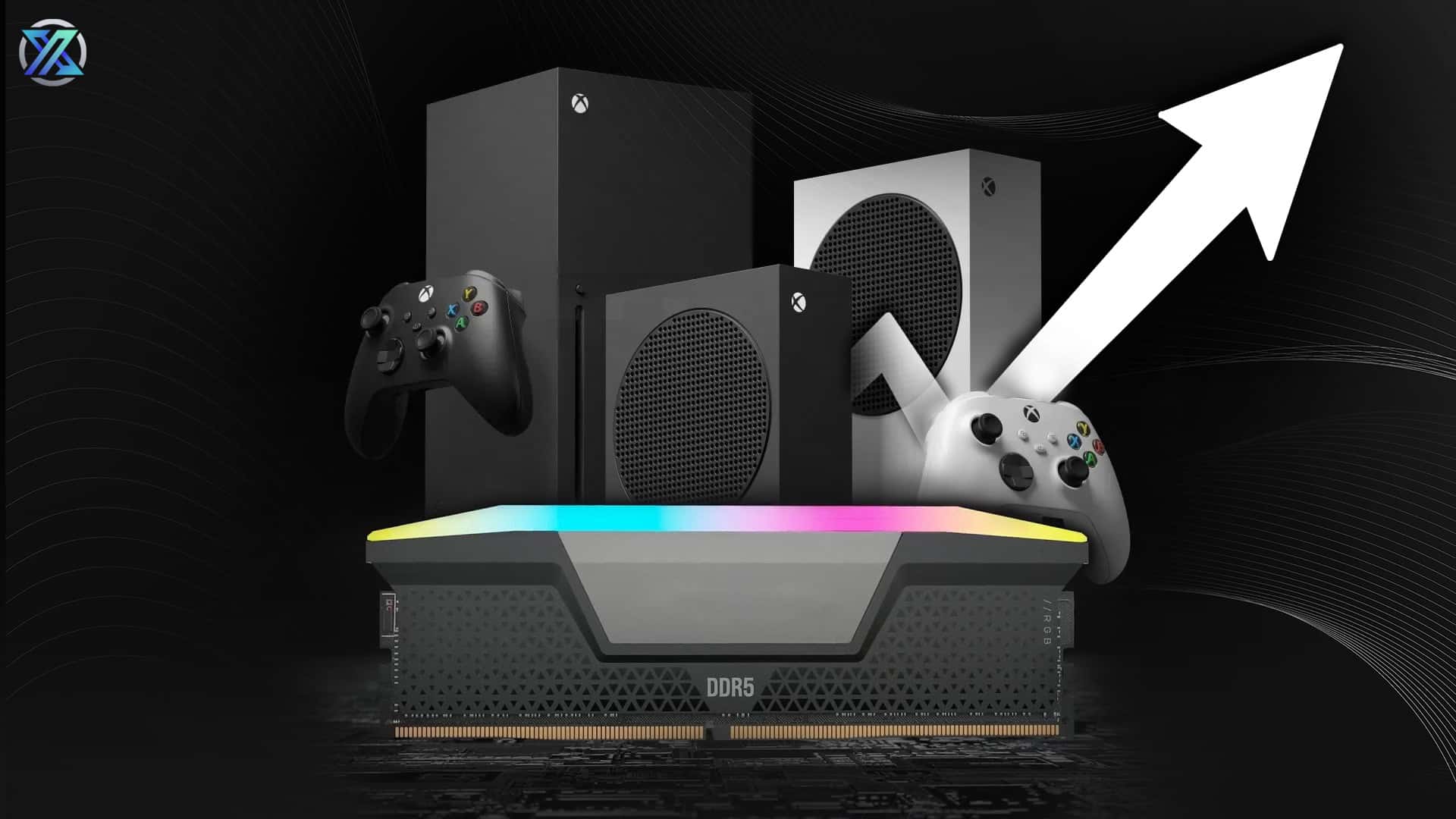
The gaming industry might face a tough time as RAM prices worldwide keep on rising steeply. Next-gen consoles might be disrupted with higher memory costs already in the pipeline and mid-gen refreshes like the PS5 Pro rumored to be launched soon. These manufacturers are getting ready to bring out more powerful hardware with higher RAM requirements becoming the point where the problem really starts.
A Global Spike in RAM Prices : What’s Causing It?
The RAM price increase is primarily caused by the confluence of market demand, production cuts, and the shift to AI technologies which is the most aggressive. The memory giants such as SK Hynix, Samsung, and Micron have all majorly transitioned their resources to high-bandwidth memory (HBM) that is used in AI accelerators and data centers.
The transition has led to a decline in the availability of normal DRAM modules which in turn has made them very costly for the manufacturers of PC and other consumer electronic hardware. Industry analysts are revealing that the price has gone up in the range of 20 to 30% quarterly and the hikes may go up even more in early 2025 as per their forecasts.
On the other hand, console manufacturers who are working on very narrow margins are going to face the issue with concern.
Why RAM Matters So Much for Next-Gen Consoles
Modern game consoles, as the focus of the video game industry, depend substantially on RAM to guarantee fast loading, high-quality textures, and upscale graphics. As the size of game worlds increases and technologies like ray tracing or AI-driven upscaling become commonplace, faster and larger memory will be a must for consoles to stay at the top of their performance.
The question is: The next-gen consoles were already anticipated to have :
- Larger GDDR6 or GDDR6X memory pools
- Higher bandwidth for 4K and 8K gaming
- Machine-learning functionalities support
- Complicated rendering pipelines
The unexpected rise in RAM prices might be the sole reason why the already costly upgrades were planned for development and manufacturing to be more than twice the price.
Potential Impact on PS6, Xbox Next and the PS5 Pro
The situation now is that Sony and Microsoft have to make tough decisions regarding their new hardware cycles :
- Increased Retail Prices : In case of a continued rise in RAM prices, both the companies might have to set higher prices for the consoles at launch that would hurt their sales and thus, the move could be very risky in an already stiff market.
- Decreased Profit Margins : Manufacturers of consoles usually sell the hardware at or close to their cost and then make their profits from software sales and subscriptions. The higher costs of RAM might bring down the profit margins even more.
- Hardware Restrictions : Developers might have to lower the following:
- The maximum limit of memory
- The speed of memory transfer
- The frequency of internal clocks
Any one of these alterations could restrict the power of the next-gen devices.
- Gradual Launches or Postponements: In case the companies require more time for redesigning components or for new supply agreements, the console timelines could be affected.
The much-talked-about PS5 Pro, which is rumored to sport speedier RAM and a more powerful GPU, is likely to be the first device exhibiting the effect.
Why the AI Boom Is to Blame
AI development has progressed at such a rapid rate that the need for high-performance memory has increased to a level that has never been seen before. The training of AI models, particularly that of large language models, necessitates a huge memory bandwidth, which in some cases may be up to 10 times that of a gaming console.
The production of HBM has turned out to be a very lucrative business for memory manufacturers, thus, these manufacturers have decided to reduce the production of consumer RAM in favor of enterprise-grade hardware. This shift has led to the creation of a perfect storm :
- Console-grade memory availability has decreased
- There is an increase in competition among hardware manufacturers
- The increase in costs has been so dramatic that they have been transferred throughout the chain
Unfortunately, consoles are not as important as AI servers, cloud platforms, and data centers and hence are at the lower end of the industry's priority list.
What Developers Are Worried About
The game studios are worried that memory limitations might restrict their innovation and technical aspirations. RAM plays a crucial role in almost all the game design aspects, such as :
- Texture quality
- Open-world streaming
- AI behavior
- Frame rate stability
- Ray tracing performance
In case the upcoming gaming consoles are forced to reduce their memory because of the increasing costs, the game creators might have to lower the vision or quality of their works, a step no operator intends to take in a time that emphasizes movie-like, vibrant, and engaging experiences.
Could Cloud Gaming Be the Workaround?
There are some analysts who think that the RAM crisis might motivate the big players of the gaming industry, like Microsoft and Sony, and even Nintendo, to step up their cloud gaming investments. In case a few next-gen features get executed through the cloud, the console makers might lower the demand for local hardware.
Nevertheless, cloud gaming has still got the following issues to deal with :
- Latency
- Bandwidth limitations
- Regional availability
- ISP throttling
Thus, even though cloud integration might be beneficial in the long run, it will not completely eliminate the short-term pressure created by RAM pricing.
Looking Ahead : A Rocky Road for Next-Gen Hardware
Memory prices are presumed to escalate during 2025 and thus console makers will have to go through a very difficult area. Vendors of the hardware like, Sony, Microsoft, and others will have to :
- Obtain long-term contracts for RAM supply
- Think about hybrid or modular console designs
- Be attached to the performance aspirations along with the price tag
- And finally, react to the industry-driven shifts caused by AI demand.
Is there anything positive?
The gaming industry is still a huge market, and the companies will certainly find ways to get through these hurdles by being innovative.
What is the downside?
The next-gen consoles could be pricier, delayed, or even less exciting than what players expect in terms of their technological advancements.
Currently, the RAM price hike looks like it would be one of the major tech obstacles for the gaming industry for all those years and its impact may later on determine the features of the new consoles.
Conclusion
To summarize, the increase in worldwide RAM prices is turning out to be a major barrier to the forthcoming gaming consoles. As memory producers lay stress on AI technologies and cut down the production of consumer RAM, it will be trickier for firms like Sony and Microsoft to choose between the higher cost of production, hardware compromises and strategic difficulties.
The impact of this memory shortage is inevitably felt in the form of higher retail prices, delayed launches, or a redesign of components. Although the industry will adapt, as it always does, the road ahead for next-gen hardware seems to be much tougher than expected. If the cost of RAM keeps on increasing, the players may have to change their expectations regarding the pricing, performance jumps, and release timelines of future consoles.