


“What if your next gaming monitor wasn’t on your desk… but on your face?”
For years, gamers have chased after bigger screens, higher refresh rates, and smoother performance. We bought massive monitors. We chased 144Hz, then 165Hz, then 240Hz. We rearranged our entire lives around our setups.
Now, ASUS Republic of Gamers just showed up at CES and casually said: What if you didn’t need the monitor at all?
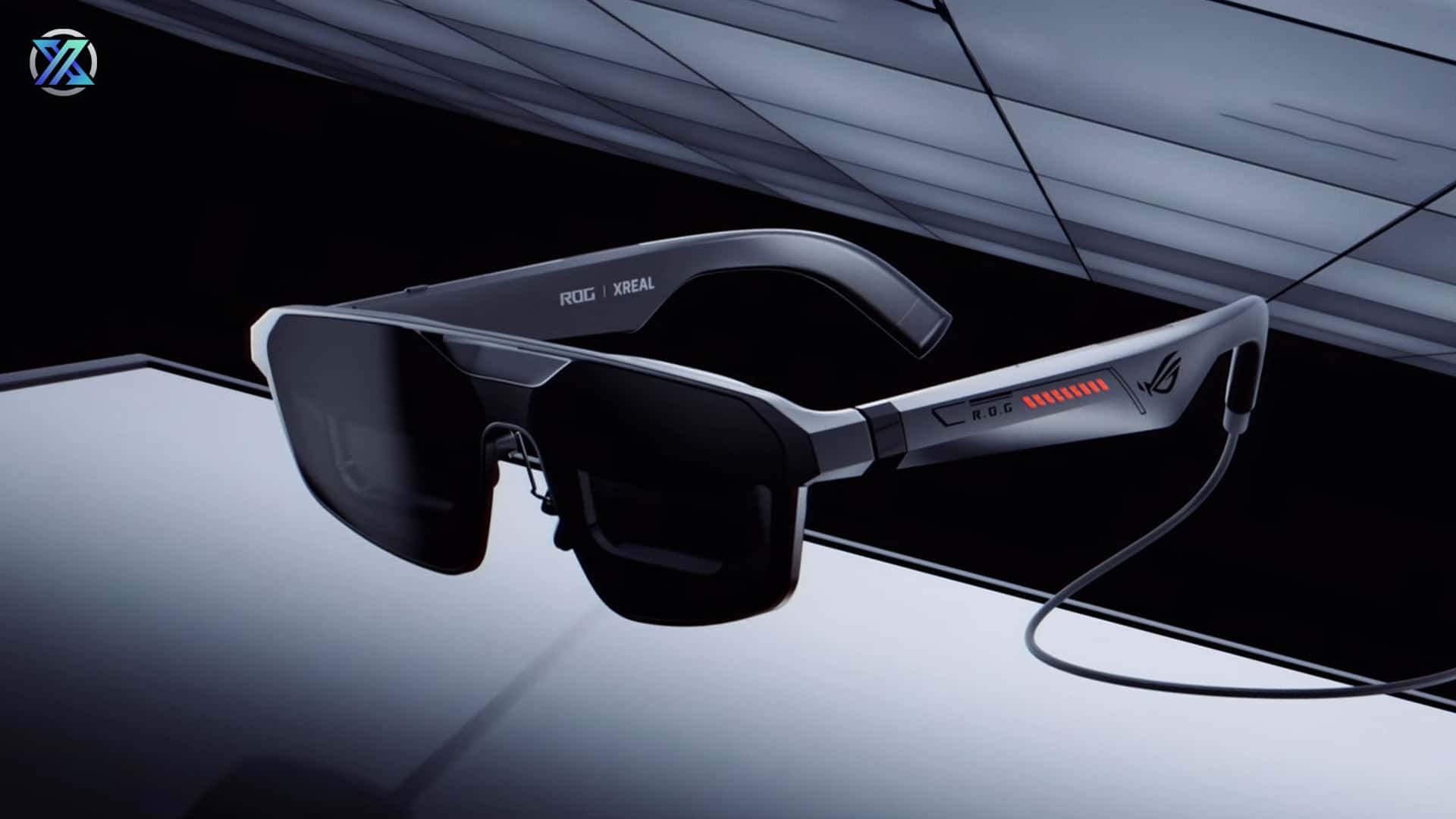
Enter the ROG XREAL R1 AR Gaming Glasses, a wearable display born from a new partnership between ASUS ROG and XREAL, and somehow packing a 240Hz refresh rate into a pair of glasses that weighs less than most gaming mice.
No, that’s not a typo. Yes, this is real. And yes, it might quietly mess with how we think about gaming screens forever.
What exactly are the ROG XREAL R1 glasses?
At a glance, the ROG XREAL R1 looks like a sleek pair of futuristic sunglasses. But once you plug them in, they turn into something far more ridiculous (in a good way) :
- A giant virtual screen floating in front of you
- Full HD (1080p) visuals per eye
- An eye-watering 240Hz refresh rate
- Ultra-low latency built specifically for gaming
- Plug-and-play support for PCs, consoles, handhelds, and phones
The idea is simple : instead of gaming on a monitor, you game inside a massive virtual display that follows your head, without the bulk of a VR headset.
❌No straps.
❌No room sensors.
❌No “I can’t see my keyboard” panic.
✅Just glasses. Gaming glasses!!
Why 240Hz on XR glasses matter
Let’s get this out of the way: 240Hz is not just some marketing fluff.
If you’ve ever jumped from 60Hz to 144Hz, you know the feeling. Everything suddenly feels smoother. Snappier. More responsive. Going to 240Hz is less dramatic, but once you get used to it, going back to anything less feels alien.
Now apply that logic to wearable displays.
Most AR or XR glasses out there cap at 90Hz or 120Hz. That’s fine for movies or productivity. But for fast-paced shooters, racers, or anything competitive? You feel it.
The ROG XREAL R1 pushing 240Hz means :
✅Cleaner motion during fast camera pans
✅Less blur in twitch shooters
✅Lower perceived latency
✅Reduced eye strain during longer sessions
In short : this isn’t “AR glasses that can game.” These are gaming displays first, just… worn on your face.
The big promise : a 171-inch screen you can carry
One of the most jaw-dropping claims ASUS and XREAL are making is the screen size. The R1 projects a virtual display that feels like a 171-inch screen viewed from about four meters away.
That’s :
- Bigger than most living room TVs
- Bigger than most gaming monitors
- Bigger than what most of us realistically have space for
But here’s the key difference: it’s personal.
You’re not blocking the room. You’re not fighting glare. You’re not competing for desk space. It’s just your screen, wherever you want it.
Quick breakdown : ROG XREAL R1 at a glance
| Feature | What it means for gamers |
| Refresh rate | 240Hz: Smoother than most gaming monitors |
| Resolution | Full HD (1920×1080) per eye |
| Virtual screen size | Feels like ~171 inches |
| Latency | Extremely low, built for fast gameplay |
| Weight | Around 90g: Lighter than VR headsets |
| Connectivity | USB-C, HDMI, DisplayPort (via ROG dock) |
| Audio | Built-in speakers tuned for spatial sound |
| Use cases | PC, console, handheld, mobile gaming |
Yes, it’s basically a portable esports-grade display that you can wear.
How do you actually use these things?
This is where the ROG XREAL R1 quietly wins points.
Unlike VR headsets, these glasses don’t trap you in another world. You can still see your keyboard, controller, snacks, and probably your cat judging you from the corner.
You plug them in via USB-C or through the ROG Control Dock, which adds HDMI and DisplayPort support. That means :
- Desktop PCs
- Gaming laptops
- Consoles
- Handhelds like the ROG Ally
- Even smartphones
No complicated setup. No calibration rituals. No “please clear 2×2 meters of space.”
Just plug in and play.
Comfort matters and ASUS seems to get that
Gaming wearables live or die by comfort. Nobody wants a brick on their face for three hours.
The R1 glasses focus heavily on :
- Lightweight design (under 100g)
- Balanced weight distribution
- Electrochromic lenses that adjust tint depending on what you’re viewing
- Built-in audio, so you’re not forced into bulky headphones
This makes them far more “session-friendly” than traditional VR headsets. You’re not gearing up, you’re just… putting on glasses.
That distinction matters more than it sounds.
Is this VR? AR? XR? Does it even matter?
Technically, ASUS and XREAL are calling this XR, extended reality, because it blends elements of AR and virtual displays without fully replacing your environment.
But honestly? Most gamers won’t care about the label. What matters is :
- You’re not locked into a virtual room
- You’re not cut off from reality
- You’re getting a massive screen without physical limits
Think of it less like VR and more like a next-gen monitor that ignores physics.
Who are these glasses actually for?
Let’s be real: the ROG XREAL R1 won’t replace every gaming setup.
But they make sense for :
Competitive gamers : If you’re chasing 240Hz monitors and shaving milliseconds off input lag, these glasses are perfect for you.
PC gamers with limited desk space : Not everyone has room for a massive monitor or dual-screen setup, and the R1 delivers a giant virtual display without taking up space.
Handheld gamers : Playing on a small handheld screen is fine… until you experience your game blown up to what feels like 170 inches, anywhere you want!
Frequent travelers : Hotel TVs are awful, and carrying a monitor isn’t practical; these glasses solve both problems.
Minimalists : If a clean setup sparks joy, replacing a physical monitor with wearable tech starts to feel less like a gimmick and more like an upgrade.
If your idea of gaming bliss is a 240Hz display, zero clutter, and maximum immersion, the ROG XREAL R1 doesn’t feel experimental; it feels like the next logical step.
The bigger picture : why this collab matters
This ASUS × XREAL partnership isn’t just about one product.
It signals something bigger :
- Wearable displays are getting serious about performance
- XR isn’t just for productivity demos anymore
- High refresh rates are becoming the baseline, not a luxury
ASUS bringing ROG branding into this space tells us one thing loud and clear: this isn’t experimental tech anymore. This is ASUS betting that gaming displays don’t have to live on desks forever.
So… is this the future of gaming screens?
Maybe not for everyone. Not yet.
But the ROG XREAL R1 feels like one of those moments we’ll look back on and say, “Yeah, that’s when things started shifting.”
When a pair of glasses can :
- Match esports-grade monitors
- Outperform most TVs
- Travel in your backpack
- And still feel comfortable to wear
…you start questioning why your setup needs to be bolted to a desk at all.
Whether these glasses become mainstream or remain a high-end niche, one thing’s clear: ASUS and XREAL just raised the bar for what gaming displays can be.
And if 240Hz on your face sounds ridiculous today… Well, so did 144Hz once upon a time.

