

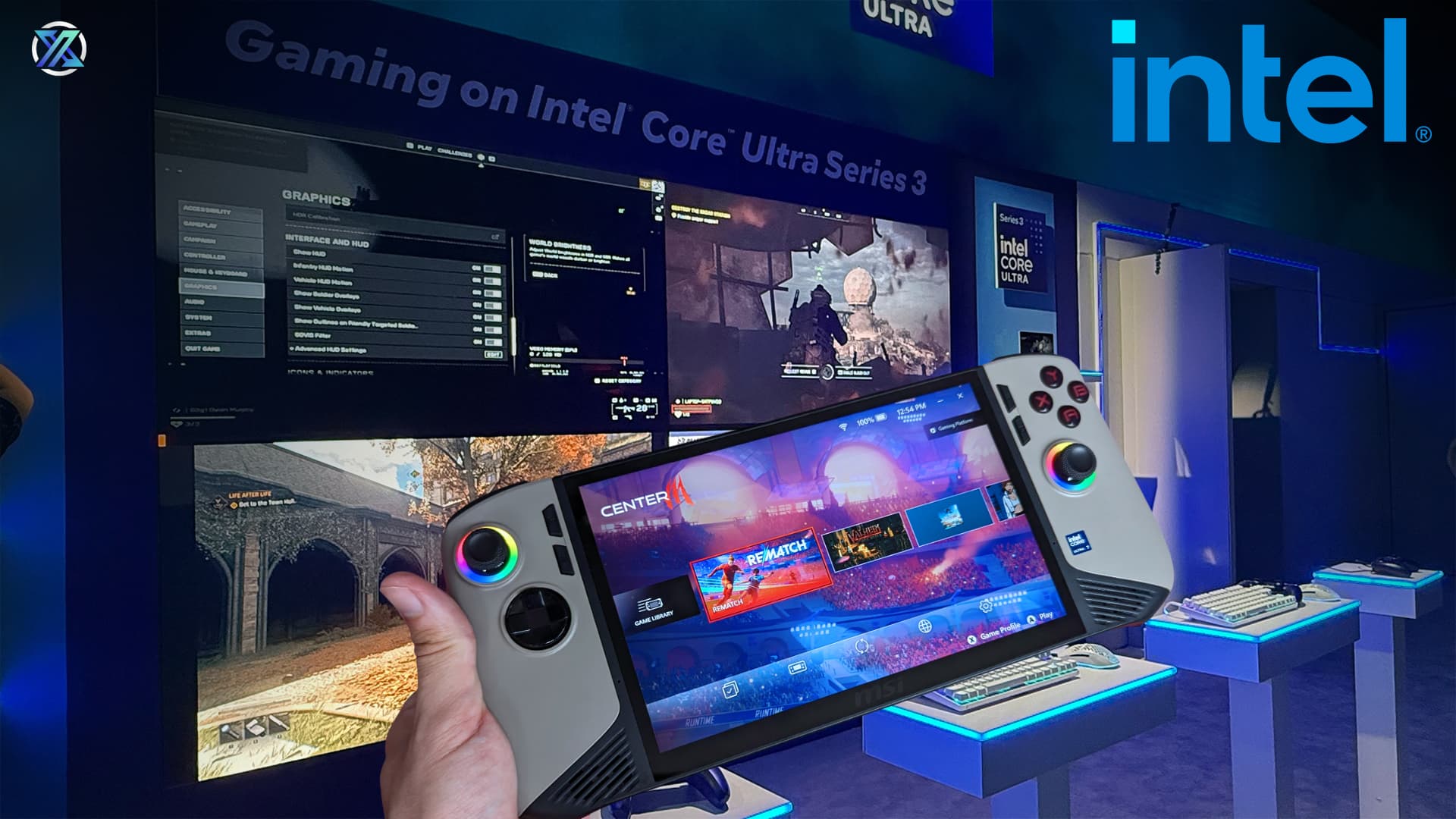
The handheld gaming PC market is getting crowded with Intel finally jumping into the competition. As per the reports, Intel is developing new chips designed particularly for handheld gaming devices, hinting that something bigger is arriving soon. Instead of adapting laptop processors for smaller devices, Intel appears to focus on purpose-built silicon that can handle modern-day PC games while mitigating battery and overheat problems. Currently, since AMD-powered handhelds dominate the market, Intel's entry into this can revolutionize everything in unexpected ways.
If these chips manage to keep up to expectations, then the future of handheld gaming PCs would be fostered and ultimately benefit the players. As CES 2026 is the talk of the town now, Intel's handheld news is not just a rumor; it will be an exciting hardware story that hardcore gamers should keep their eyes open for. Those who want to learn what exactly Intel's new chip is, its cost, launch timelines and how it can impact the gaming industry's future should religiously go through this article for the latest updates.
About Intel's New Handheld Gaming PC Chips
According to an Intel Newsroom article, the renowned tech-tycoon, Intel, has officially debuted its next-generation Core Ultra Series 3 processors, codenamed Panther Lake, which specifically focus on expanding the handheld gaming PC market. It is to be noted that these future-ready chips are the first built on Intel's advanced 18A manufacturing process. With this move, Intel is directly stepping into loggerheads with AMD's current market dominance. Curious about what makes Panther Lake special? Check out the table below to closely analyze the key specifications and standout features of Intel's new-gen gaming chips.
| Key Features | Description |
| Manufacturing Process | Intel 18A (2nm-class node with RibbonFET and PowerVia) |
| CPU Performance | Up to 50% faster multi-threaded performance than earlier generation models |
| Graphics Performance | Up to 77% faster gaming performance when compared to Lunar Lake iGPU |
| Integrated Graphics (iGPU) | New Xe3 architecture (Arc B390) with up to 12 Xe cores |
| Power Efficiency | Up to 15% better performance-per-watt than the Intel 3 process node |
| Connectivity | Thunderbolt 5 and Wi-Fi 7 R2 support |
| AI Performance | Up to 180 total platform TOPS (50 TOPS from the NPU 5) |
| AI Features | Support for XeSS 3 with multi-frame generation for improved frame rates |
| Target Devices | Handheld gaming PCs, laptops, and edge devices |
How Are Intel's New Chips Unique From Traditional Laptop Processors?
Handheld gaming chips may appear like usual laptop processors, but, in reality, they are built with a very different perspective. Traditional laptop processors are crafted to balance productivity, multitasking, and occasional gaming while operating at higher power limits and larger cooling solutions. On the other hand, Intel's fresh chips are purpose-built for portability and powered with robust thermal constraints. Another difference lies in the fact that handheld-centric chips rely on integrated GPU performance, since there's no room for a dedicated graphics card.
This indicates ensuring better iGPU tuning for new-gen games, smoother frame pacing, and improved performance per watt, something that standard laptop CPUs aren't always ready for. Most importantly, these chips are crafted with controller-first gaming, sustained performance, and compact form factors in mind. Keeping the short performance bursts aside, handheld processors aim for stable gaming sessions over long periods, making them far suited for hardcore players than conventional laptop silicon. While laptop processors try to do everything a bit, these handheld gaming PC chips are focused on delivering playable PC gaming exceptionally.
When to Expect and Approximate Cost
Handheld gaming PCs powered by the fresh Intel Core Ultra Series 3 “Panther Lake” chips were officially launched at CES 2026 on January 5, 2026. Players who want to know about its official release can expect it to arrive by January 27, 2026. Pre-orders for the consumer devices featuring the brand-new processors, including laptops and handhelds, started on January 6, 2026.
Gizbot indicated that more designs from several manufacturing partners are expected to be released by the first half of 2026. Moreover, Intel also highlighted that a dedicated "handheld gaming platform" is in progress and more details will be publicly issued by later in 2026.
As of now, Intel hasn't announced the official pricing details, and it seems that the partner manufacturers like Acer and MSI will determine the final cost. Considering industry experts' reviews and market trends, high-performance handhelds with AMD processors typically cost around and in between $600 and $1,100+. Reviewers like TechRadar suggested that the devices with these new and high-performance chips are likely to arrive with a price possibly starting from the $1,000 mark.
Should Gamers Wait for Intel-Powered Handhelds?
Whether you should wait or not depends on your requirements and patience. If you are satisfied with current handhelds in the market, such as the Steam Deck or the ROG Ally, there's no need to wait. Since these devices are widely supported, well optimized, and powered by AMD chips, they already have a proven experience that players trust. Gamers who want a handheld right now can go for the current options, as they are reliable.
If you enjoy considering next-gen tech, waiting for Intel-powered handhelds could be an efficient pick. Sources revealed that Intel's upcoming chips are expected to focus primarily on improved integrated graphics, performance-per-watt, and better efficiency. Intel's stepping into this space will bring real competition, which could ensure refined graphics, performance and software support for gamers. Players should note that the first-generation devices may arrive with quick fixes, and in such circumstances, waiting for authentic reviews or a second batch of production could be a wise decision.
Potential Benefits and Risks for Early Buyers
Jumping into Intel-driven handheld gaming PCs could be an exciting move, but it comes with a double-edged sword-like decision. Buyers who will get it first-hand can enjoy next-gen performance and efficiency with its arrival. The Intel-powered chips are expected to arrive with improved graphics and performance-per-watt, which are ultimately the key factors for portable gaming. Since new-gen devices often arrive with new features and improved cooling designs, buyers will get something special that isn't available on existing alternatives.
In contrast, early models are prone to software and driver maturity issues. Intel's handheld ecosystem is still fresh, indicating that some games may not be fully optimized at launch. Battery life and overall performance could differ in real-world use, especially after a heavy-gaming session.
Wrapping-Up
If Intel gets everything appropriately, then it would be a blessing for the players eagerly awaiting it. In this situation, a big question remains: Could Intel deliver chips that genuinely stand out in a market dominated by AMD's handheld kings? Since CES 2026 is currently ongoing, all eyes remain on what can happen next and how Intel's new PC chips could impact the gaming industry.
While the launch timeline roadmap is clear, potential buyers need to wait sometime more time to hear about the official price tag. If you want to get hands-on with something new, Intel's handhelds could be worth waiting for. Intel's entry into this genre is good news for gamers, as it will be more about deciding the future rather than just being in the competition.