


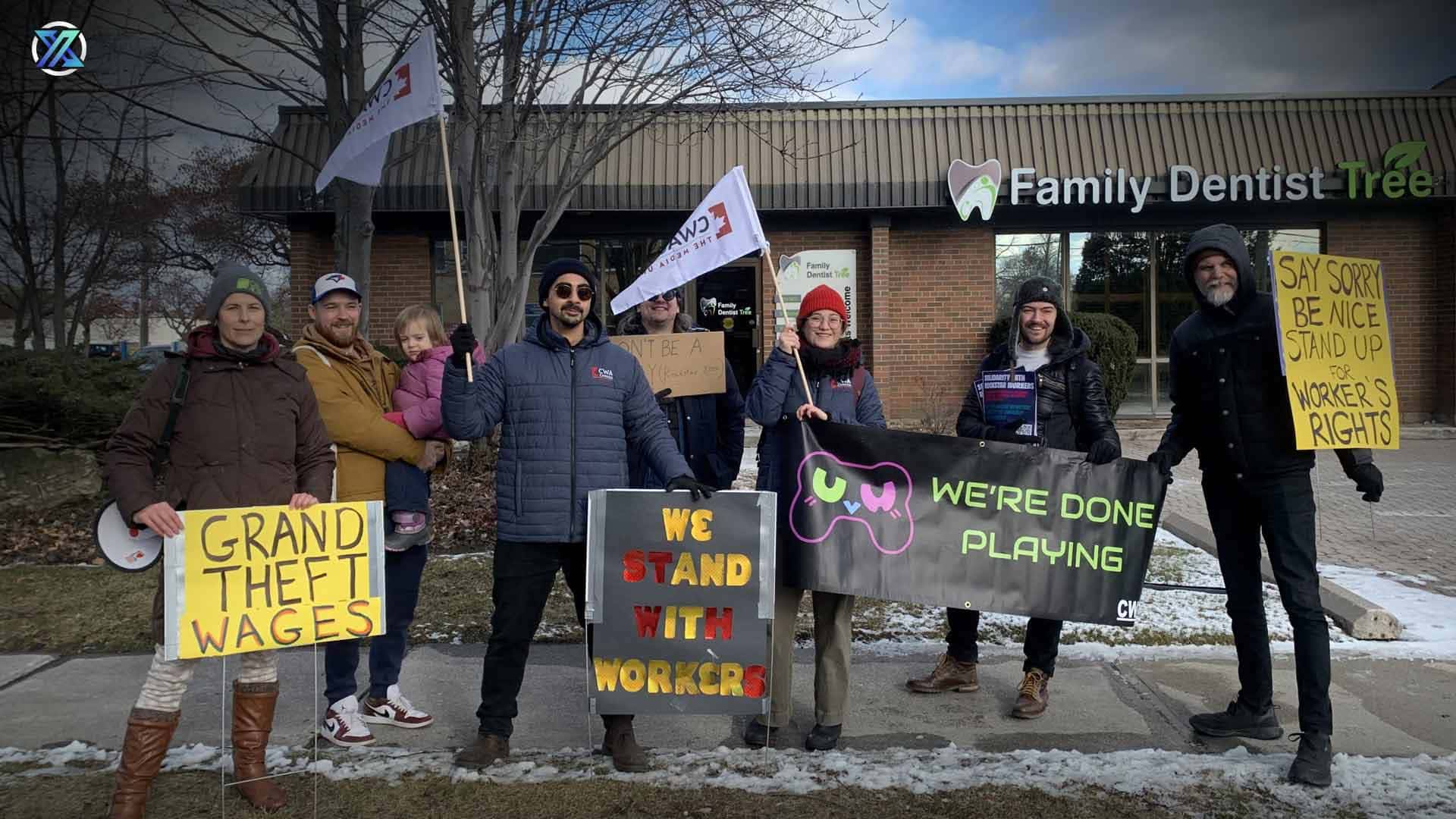
“When courts get involved, the loudest opinions usually have to wait for the facts to catch up.”
The ongoing dispute between Rockstar Games and a group of former employees has reached a critical juncture, and it did not go the way the workers had hoped.
A UK employment judge has rejected interim pay claims for 31 fired Rockstar employees, ruling that the evidence presented so far does not clearly prove the dismissals were primarily motivated by union activity. The decision does not end the case, but it does shape how the fight moves forward and adds a layer of complexity to one of the most closely watched labor disputes in the gaming industry right now.
For gamers, especially those watching Grand Theft Auto 6 development closely, this ruling matters more than it might seem at first glance.
What actually happened in court
The case centers on a group of Rockstar employees who were dismissed in late 2025. Many of them were reportedly involved in efforts to organize with the Independent Workers’ Union of Great Britain. The union argues the firings were retaliatory and designed to discourage collective organizing.
The workers asked the tribunal for interim relief, which would have required Rockstar to continue paying them while the full case is heard. That kind of relief is rare and only granted when a judge believes there is a strong likelihood that the dismissals were unlawful.
In this instance, the judge ruled that the threshold had not been met. The court concluded that, based on the evidence currently available, it could not be shown that union activity was the main reason for the dismissals.
That decision means the 31 former employees will not receive interim pay while the broader legal case continues.
Rockstar’s position versus the union’s claims
Rockstar has consistently denied any union-busting intent and maintains their stance that the dismissals were purely related to breaches of confidentiality, and not organizing efforts. Rockstar states that ongoing projects were shared inappropriately, which violated company policy.
The union is adamant that this is not how things went. It argues that the discussions cited by Rockstar were protected workplace conversations and that the confidentiality claims are being used as cover for retaliation.
The judge’s ruling does not confirm Rockstar’s version of events. It simply states that, at this early stage, the union did not provide enough evidence to justify interim relief.
That distinction matters. The full case is still active.
Political attention adds pressure
The case has drawn attention beyond the courtroom. UK Prime Minister Sir Keir Starmer publicly described the allegations as “Deeply Concerning.” and said “Ministers would investigate the situation further.”
That political scrutiny does not change the tribunal’s decision, but it does increase pressure on Rockstar and the wider industry. Most disputes of this visibility tend to be magnified, most likely influencing how many other studios handle their internal conflicts and worker organization.
This case is far from fading quietly into the background yet.
| Topic | Current status |
| Employees affected | 31 UK-based Rockstar workers |
| Interim pay | Denied by the employment judge |
| Union claim | Firings linked to union organizing |
| Rockstar’s stance | Dismissals tied to confidentiality breaches |
| Case outcome | Still ongoing, no final ruling yet |
This table captures the present moment, not the final verdict.
What this means for Rockstar and the industry
If we take Rockstar’s perspective on the matter, the ruling is definitely a short-term win, with the company now avoiding paying salaries during the ongoing legal process, all while gaining breathing room to defend its actions.
The judge has, however, left room for the full case to be argued, so the union and fired workers still have a chance, and the denial of interim relief does not determine whether the dismissals were lawful.
This case is massive for the gaming industry at large, highlighting how fragile labor protections can be, especially in studios where secrecy and long development cycles are normal. When confidentiality and organizing rights collide, the outcome is rarely simple.
Why gamers should care
It’s one of the biggest studios in the world, and we have a sneak peek at how they treat the people building the games players love.
As union conversations continue to grow in game development, cases like this help define what is protected speech, what counts as misconduct, and where the balance of power sits between studios and staff.
The court has not said Rockstar did nothing wrong. It has only been said that the proof is not strong enough yet.
That leaves one thing clear. This story is not over, and whatever comes next could shape how future developers choose to speak up, organize, or stay silent.
For now, the judge has hit pause on pay, not on accountability.

