


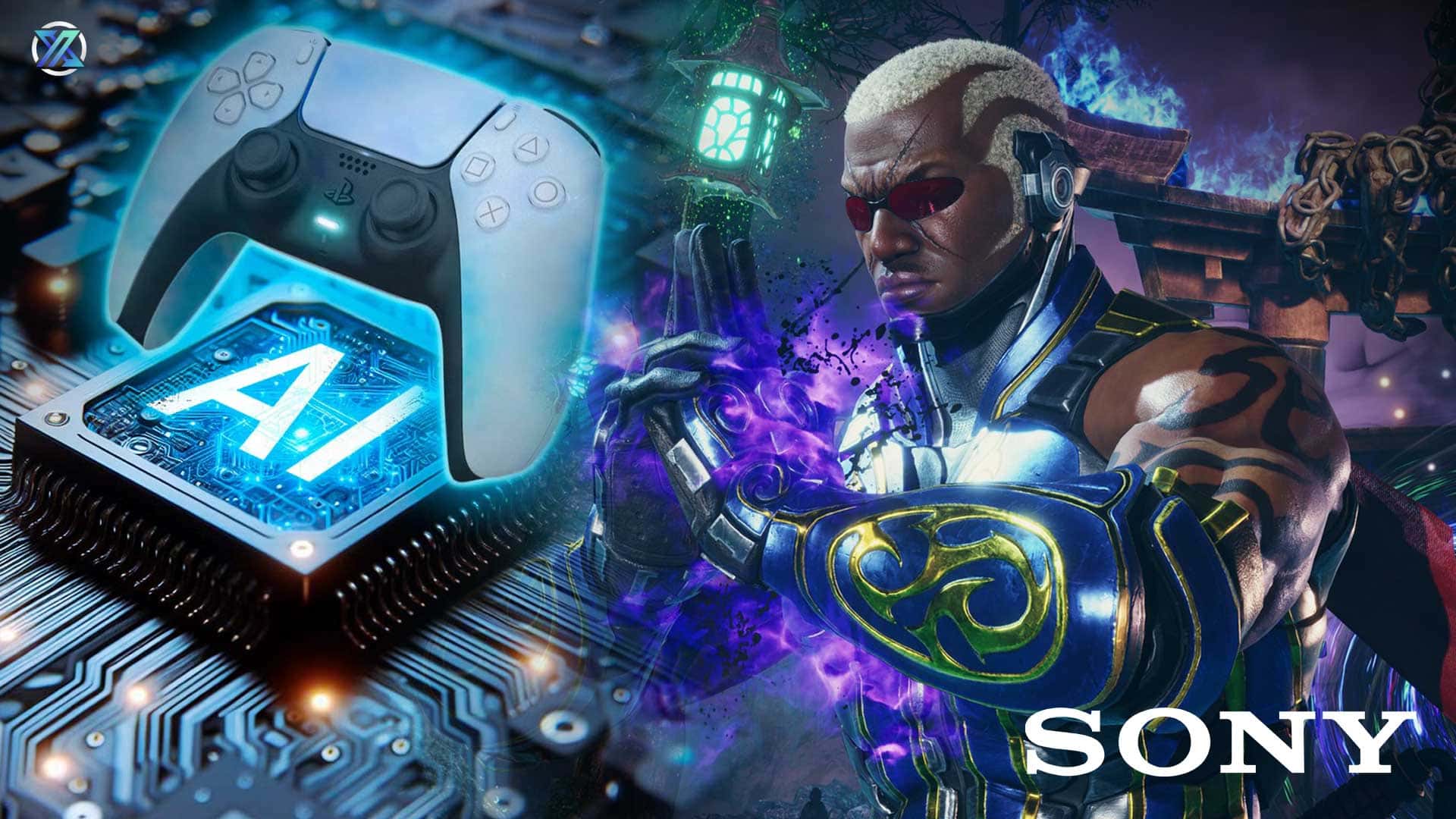
The patent regarding artificial intelligence that can help players during gameplay has brought up the topic of discussion in the gaming industry one more time. The patent explains a mechanism that encompasses AI-backed “ghost players” who can show up live to serve, help, or perform the actions of the game when a gamer is facing a difficulty. Although the concept is still theoretical, it provides the possibility of AI being a more involved character in the coming PlayStation games.
The very concept of tension release through the usage of AI-going non-human mindset of Sony is focused on real-time, context-sensitive guidance that changes as the game progresses instead of the outdated ways of help through static tutorials and preset assist modes. With this, players might not only learn the mechanics but through continuous guidance, overcoming hard parts, and finally getting even more involved in the sophisticated world of game will be done in a whole new way.
Understanding Sony’s AI Ghost Player Concept
The patent describes a system designed to let the game track what kind of player is performing, and when a player is struggling (either with failure or hesitation) in any area, to introduce a ghost into the game. The ghost is controlled by AI, and it is not a replacement for the player, but rather will show good examples of actions to take or paths to follow relevant to exactly what the player is currently doing.
Sony's ghost differs from the replays seen in many racing games, which are essentially a recording of what occurred some time ago, since it is generated in real time based on the conditions that exist at the time and does not repeat pre-recorded data. The ghost can demonstrate how to climb difficult terrain, solve a puzzle, or deal with a battle, and therefore provide a mentoring effect on the gameplay rather than functioning merely as an assistance on-screen.
According to the patent, the ghost has possible visual representations, so players can follow along naturally while remaining in the game world.
How Real-Time Gameplay Assistance Could Work?
Through continuous analysis, the system proposed by Sony's AI analyzes data such as input, timing, failures, and progression as they occur through game play. From this continuous analysis, the AI is able to determine what areas the player is currently struggling within a game. This system allows the AI to provide assistance to the player through actions in the environment, rather than using conventional hints (e.g., pop-up hints or game pauses).
For example, an AI could demonstrate timing of a jump within a platforming level which allows the player to jump across a gap. An AI could also provide guidance on how the player can best position themselves to win a fight within an action game, or how they can use their special skill effectively.
The fact that the AI can adapt to the moment instead of being generic in its suggestions or hints means that the player will receive assistance that is contextual to their current situation, thereby allowing the player to learn through observation which is typically more intuitive than to read guide books or watch external video walkthroughs.
As mentioned above, the patent indicates that this assistance could be optional, thus placing the onus for receiving this augmented training on the player.
Why Sony Is Exploring AI-Driven Gameplay Help?
As modern video games have become more complex, accessibility and onboarding are becoming even more important for players. For many players, the reason they stop playing a game isn't because they're no longer interested; they simply get frustrated by sudden spikes in difficulty or the inability to understand the mechanics of the game. Sony has addressed this issue with its AI ghost system. This system helps to 'smooth out' the learning curve of a video game, while not simplifying the game in any way.
For game developers, this allows them to create deeper and more involved systems, without leaving any players behind. Game developers no longer need to create long tutorials or create difficulty settings at the two ends of the spectrum; instead, they can use adaptive AI to provide players with the help they need based on their individual needs.
For Sony, this also fits into the larger trend of using AI not only as a tool for game development but as a live component that makes the experience of playing a video game richer.
Mixed Reactions from the Gaming Community
As with many AI-related innovations, reactions to Sony's patent have been divided. Many gamers are excited about this idea, particularly those who have difficulty playing certain difficult games or prefer a less stressful experience when progressing through a game. In this way, AI ghost assistance would eliminate some of the frustration of these players and allow them to continue enjoying their gaming experience.
However, there are also many gamers who fear that systems like this could lead to a loss of satisfaction from achieving goals on your own. Many feel that real-time AI assistance will remove the need to explore, experiment, and achieve through failure.
Another frequent concern of gamers is how the feature would be implemented. Gamers feel that any AI assistance provided should not be required, nor should it intrude on their experience. The success of this type of feature will likely depend upon how well Sony and its developers can strike a balance between providing AI assistance and allowing players to have a certain degree of control.
Sony’s Broader Push Toward AI in Gaming
Soni's (Company's name) patent represents another step towards the company finally having their AI division and developing AI in all of its products. As demonstrated by the use of advanced AI opponents in racing games and the smarter behaviours of NPC's (non-playable characters), the company has been looking at how to integrate AI into video games and make it more prominent. The concept of the AI "Ghost Player" fits within this plan of integrating AI into video games and suggests that Sony wants to view AI not only as a "background" logic element but also as a key component of a player's experience while playing the game.
The focus on personalising games for players so that they adapt to players instead of vice versa is also a strong indication of Sony's belief that developers should be able to create more immersive and relevant experiences for gamers in the future. The concepts currently being developed or implemented at the moment are just the first step in creating a future where AI companions, mentors, or adaptive systems become standard features of PlayStation supported titles.
Patents, Possibilities and Practical Limitations
While this is a tantalizing idea to entertain, one should not forget that a patent is not enough to ensure that a concept eventually becomes a product. Companies often file patents to cover ideas that may never be realized by customers. Whether or not Sony will make this possible product largely depends on several factors like technological issues, artistry, and gamers’ feedback.
Sony would need to be extremely precise if it were to realize a function where AI provided guidance in real-time but did not interfere with the performance, immersion, or balance. The developers will have to focus on the AI that is giving assistance that is not overbearing and is being friendly rather than intrusive.
Consequently, this patent is indicating that the company is thinking about what it could do in the future, rather than providing a strict route to follow.
How This Can Affect the Future of Gaming?
An implementation of Sony’s AI model might lead to an evolution in our game-playing relationship with progression, learning, and difficulty as they pertain to video games – games may be friendlier toward gamers without losing their challenging nature through additional adaptive assistance based upon the unique way a gamer plays each title.
However, there are larger questions to be asked concerning the extent of guidance because of Artificial Intelligence in a creative experience. How much guidance is too much? Where do you draw the line between assistance and automation? These are just a couple of the questions that will likely dominate the discussion between developers and consumers of gaming regarding AI for many more years.
For now, Sony's use of a patented technology gives us a fascinating look into one possible world in which AI has a greater and more integrated presence in video game play, learning processes, and overall experience than we have had heretofore.
Conclusion
By patenting its AI ghost Player, Sony demonstrates how AI will become a subtle yet powerful force in gaming as it relates to real-time context information that helps players not feel as frustrated due to their inability to perform. The goal is to assist and provide solutions while maintaining the same level of depth in gameplay.
This is still a theoretical concept for now, but this reflects Sony's larger vision of empowering gaming through intelligent and adaptive technology that meets the unique requirements of each player, as well as the constantly changing nature and expectations of today's gaming audience.

