
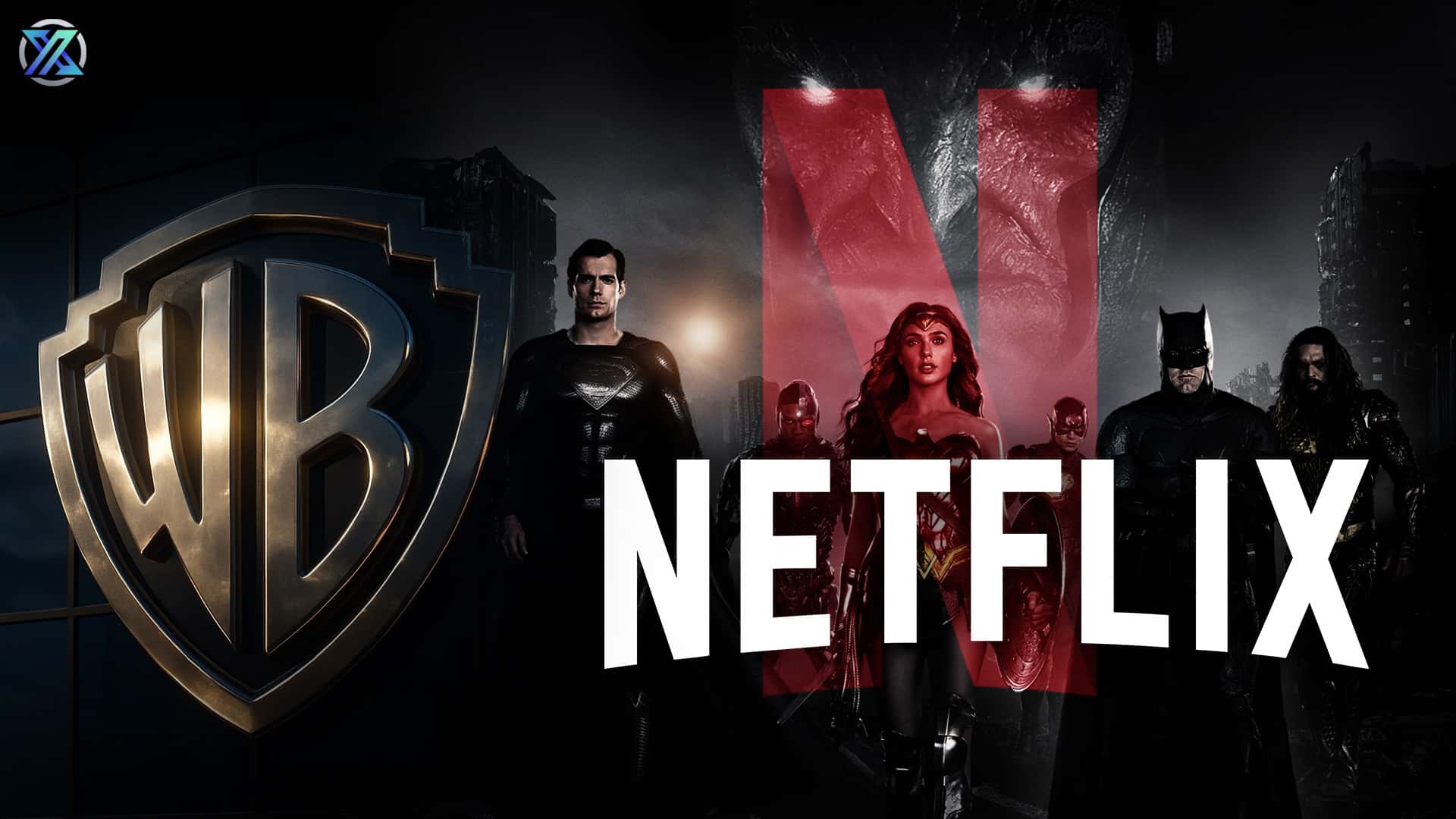
The moment Netflix revealed its stunning $83 billion acquisition proposal for Warner Bros. Discovery (WBD), it sent a ripple of waves through the industry. The unimaginable event of a streaming giant swallowing one of Hollywood's oldest studios was already set, but the debate that would follow was something totally different.
Through the recent communication with the SEC, Netflix remarked that Warner Bros. Games contributed “no meaningful value” to the enormous deal, which, in turn, ignited a storm of criticism, confusion, and speculation in the entertainment, gaming, and financial sectors.
This remark has now turned into one of the hottest topics in the industry, bringing to the fore the question of how the big corporations view gaming, where they place the value, and how much interactive entertainment really counts as a strategic issue in the media ecosystem overall.
A Massive Deal With an Unexpected Footnote
The proposal for acquisition by Netflix of WBD was, from the very beginning, a matter of controversy. WBD holds an extensive collection of movie and TV properties, including DC Comics and Harry Potter, as well as CNN, HBO, Cartoon Network, Discovery, and other networks. However, the key role of Warner Bros. Games, a leading worldwide game company and developer, contributed another stunning aspect to the case.
This gaming section owns and creates games based on the following significant franchise :
- Mortal Kombat
- Hogwarts Legacy
- Batman: Arkham
- Suicide Squad: Kill the Justice League
- LEGO games (via partnerships)
- Game of Thrones mobile titles
- MultiVersus
At present, gaming is the most lucrative entertainment sector within the market, its profits frequently surpassing the total of film, TV, and music combined. Thus, when Netflix made it public that WB Games contributed “no meaningful value” to the $83 billion valuation, it was a great shock for the people who watched the events in the gaming industry.
Was this just a legal positioning tactic of the corporations? A negotiation ploy? Or a candid evaluation of Netflix’s future goals?
Netflix’s Explanation - A Strategic, Not Emotional, Statement
Sources that are near the court filing made clear that the Netflix statement was not aimed at the commercial success of WB Games but rather at a certain financial point: Warner Bros. Games' contribution to the WBD valuation was not significant compared to those of the enormous entertainment libraries and the streaming assets.
So, from Netflix's point of view :
- HBO, Warner Bros. Pictures and Discovery Networks still have the majority of the revenue potential in the long run.
- WB Games, though making money, does not essentially change the deal's economic baseline.
- The company is acquiring IP ecosystems rather than standalone gaming profit centers.
To put it differently, Netflix is not rejecting the gaming industry, it is just clarifying that the main reason for the $83B was intellectual property and power in streaming.
The Gaming Industry Reacts - Shock, Confusion and Criticism
The gaming industry gave a reaction that was much less diplomatic than the one by Netflix.
Analysts were quick to note that WB Games had a hand in creating some of the biggest global hits in the past decade. Just to mention a few, Hogwarts Legacy is one of the highest-selling games in the world in 2023. Mortal Kombat 1 was also marked by strong sales at the start. The new version of MultiVersus keeps on getting a good number of players hooked.
It sounded like a slap in the face when talking about such a portfolio as "not meaningful" to most of the developers and fans that are angry and frustrated by the whole situation.
Experts from the industry were not silent:
“This is a very strange statement in a market where gaming is booming.”
- "Netflix, one of the leading global companies in movie and television distribution, either doesn’t get the gaming business or is deliberately undervaluing it.”
- “WB Games is surely one of WBD’s most valuable assets.”
That is what the insiders are saying,
“Netflix is gradually preparing itself for a later possibility of either spinning off the gaming unit or selling it off, which can be a reason behind such downplaying of its significance.”
Is Netflix Downplaying Gaming Because of Its Own Struggles?
Netflix has been attempting to penetrate the gaming industry for a number of years now, but the outcome has only been moderate so far.
Their plan has comprised of :
- Mobile games released straight through the Netflix app
- Buying independent game companies
- Making initial trial versions for cloud gaming
While Netflix states there are 80+ games offered to the subscribers they still have low public engagement compared to other platforms like console or PC. Consequently, some analysts maintain that Netflix’s remark on WB Games could be a sign of the company’s hesitation, some even argue cautious, approach to high-budget AAA gaming.
The issue is simple: Owning a game studio is one thing. It is a totally different story to be adept in managing the development of AAA games that are already on the first page of the market. Warner Bros. Games has many studios that are so vast and that need big budgets, long periods of development, and continuous maintenance of online service, areas where Netflix has little experience.
Strategic Possibilities Behind Netflix’s Statement
Netflix’s assertion that WB Games contributed “no meaningful value” to its $83 billion merger may indicate a strategic positioning rather than a rejection. Netflix's minimizing of the unit results in lesser regulatory scrutiny and better bargaining power. Besides, it reveals a potential strategy of divesting or splitting off WB Games, whose possible acquirers include Microsoft, Sony, or Tencent.
Rather than operating costly AAA studios, Netflix could put its emphasis on controlling and licensing major IPs such as DC, Looney Tunes, and Harry Potter. This method is in line with a content-centric strategy, permitting Netflix to make use of the strong franchises without being deeply involved in the game development process.
How It Will Impact Warner Bros. Games’ Future?
Though the remark might appear severe, it does not necessarily indicate a bad fate for WB Games. To be more precise, it highlights the fact that the streaming and gaming industries have contrasting perceptions of value.
If Netflix keeps WB Games
- Multimedia synergy shift: shows + games is the trend we should expect.
- Netflix originals may be more the case than before when it comes to cross-promotions with game franchises.
- The firm is likely to carry out cloud gaming tests linked to leading brands as its main strategy.
If Netflix chooses to sell WB Games
- The studios involved such as Rocksteady, NetherRealm, and Avalanche might be the ones to be acquired by the new owners.
- The licensing agreements for Batman, Mortal Kombat, Harry Potter, and a whole lot more might undergo a complete overhaul.
- A considerable alteration in the IP status of the third-party publishers may occur as a result of these new partnerships.
Every situation has its corresponding effect on the gaming industry.
Industry Analysts : Gaming Value Is Higher Than Netflix Claims
Notwithstanding the Netflix official stance, the analysts' opinions differ significantly.
Assuming the major IP licensing is included, the standalone valuation for the gaming division of Warner Bros. is considered by different financial institutions to be :
- $6-10 billion (conservative)
- $12-15 billion
Hence, WB Games is not a minor asset at all. On the contrary, it is usually the case that WB Games' revenue and growth capacity surpass those of the traditional TV sectors.
This disparity between Netflix's claim and experts' estimates has led to the conjecture that the giant's comments are more strategic than literal.
A Subtle Signal to Regulators
Another perspective is that of regulatory strategy. Today's mega-deals that include both gaming and streaming are subjected to much tighter international regulation, particularly in light of the Microsoft-Activision Blizzard situation.
Netflix claims that :
“The gaming business is not a major contributor to the transaction.”
It might be a clever tactic to make the deal less controversial from the point of view of the regulators. If the authorities take the view that WB Games is a minor player considering the main part of the deal, the process of getting approval will be easier, most notably in Europe and the US.
The Public Relations Challenge
Netflix has an issue with its storytelling no matter what its financial plan is. The gaming community is very protective of their industry, and technical remarks that are even non-offensive usually create a backlash. Employees at WB Games have raised concerns within the organization about the perception of their contributions to the project.
To prevent losing the gamer audience that Netflix has been attempting to attract, the company will probably have to make its statement clearer or reframe it in the upcoming weeks.
Conclusion : A Strategic Comment in a High-Stakes Deal
When Netflix stated that Warner Bros. Games had no “meaningful value” with respect to the $83 billion proposal, it was not just an emotional assessment but a financial and regulatory positioning strategy. However, the remark did provoke a response, particularly during a time when video gaming is one of the most lucrative entertainment means globally.
It is still uncertain if Netflix really looks down upon games or if it is just a matter of narrating the story of a huge deal in its favor. Nevertheless, one thing is certain that the destiny of WB Games together with its associated characters will be an important saga during the deal's progression.
The inclusion of WB Games in Netflix's ecosystem would mean the entertainment industry has witnessed one of its greatest changes so far. On the other hand, if it opts for selling the game division, the bidding wars could completely alter the industry dynamics.