
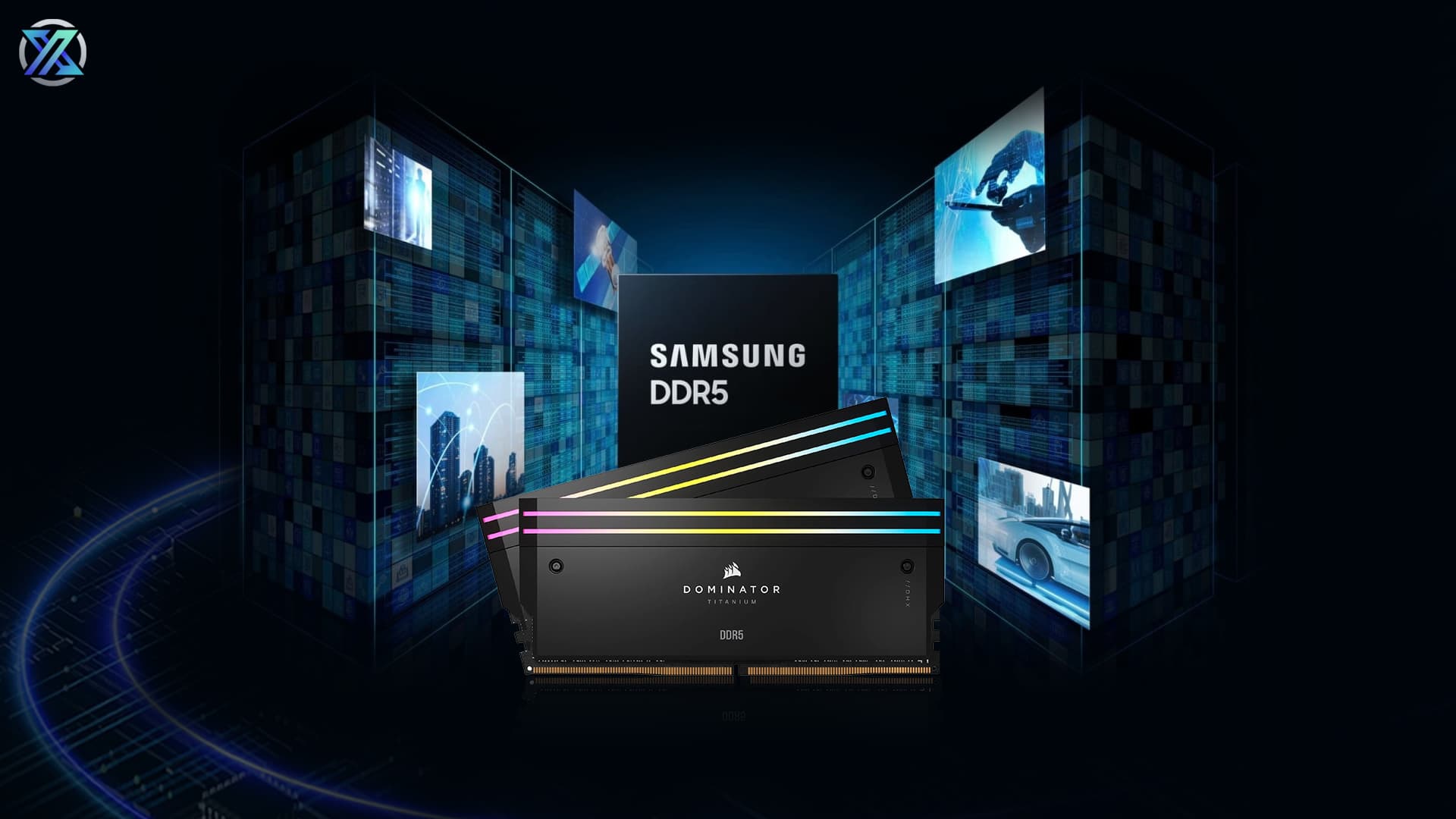
A seismic event has taken place within the PC gaming and hardware industry in the form of a decision made by Samsung, which is recognized as one of the top memory chip manufacturers in the world, getting the news that it has more than doubled DDR5 memory prices. The period of crisis prevailing worldwide and affecting semiconductor supply chains is the core reason for this step taken by Samsung. If this inordinate escalation is indeed a fact, it can create a trickle-down effect on PC gaming, system building, and the entire technology market in general.
The new generation of gaming hardware coupled with the new software's increased demands has driven the use of DDR5 as the mainstay of modern PC's components. Instances of price fluctuations like this, particularly a sharp increase, invite a lot of considerations around affordability, availability, and the overall future of the PC component cost curve.
This report is very detailed and covers the various factors leading to the price hikes by Samsung, the various categories impacted by the price hike such as gamers and the industry, manufacturers’ and consumers’ reactions, and finally what this could indicate with regard to the future of memory pricing.
Why DDR5 Matters for PC Gaming
Before we talk about price changes, it is necessary to know why DDR5 is so important for today's and tomorrow's gaming PCs.
DDR5 memory is the next generation of DDR4 and includes several advantages over its predecessor such as :
- Higher memory bandwidth
- Improved power consumption
- Support for larger capacities
- Improved performance in multitasking and data-centric apps
The high-end PC gamers, content creators, and enthusiasts have accepted DDR5 as it allows for smooth gameplay at high frame rates, quicker loading times, and better performance in demanding titles as well as applications, particularly when combined with the newest CPUs and GPUs.
With every new game and software pushing hardware requirements to the max, the role of DDR5 in providing the top performance is becoming more and more obvious.
The Price Surge : What’s Reported
Samsung has reportedly increased some of its DDR5 memory modules prices beyond 100%, according to various sources in the industry and supply chain experts. The price change is not small—it marks a very significant increase in pricing of components within a rather short time span.
The prices of DDR5 chips had already been falling owing to the global supply shortage, but a price rise of such enormous scale by one of the world's leading suppliers indicates that there are some deep-rooted and widespread problems in the market.
The increase in the reported prices depends on the model and the storage capacity, with the high-end gaming modules and premium memory kits undergoing the most drastic increase. This situation means that PC gamers who want to future-proof their builds or upgrade existing ones will be paying a lot more for the same hardware compared to just a few months back.
Underlying Causes : Supply Chain and Geopolitical Turmoil
Experts point to several interconnected factors behind the reported price increases :
- Global Semiconductor Supply Chain Disruptions
The global semiconductor sector has faced monumental supply chain issues that have lasted a few years. Some of these problems are as follows :
- Delays in production caused by the long-lasting repercussions of the pandemic
- Transportation and freight bottlenecks
- Inability to obtain raw materials
Memory chips, including DDR5 modules, are dependent on very specific components. If there is a disturbance in any part of the manufacturing or logistics process, it will have a widespread impact on the entire supply chain.
- Weak Global Economic Conditions
The international electronics manufacturing sector has been influenced by economic recessions, varying consumer demand, and inflationary pressure. Due to the increase in the prices of raw materials, transport, and energy, the manufacturers normally do not bear the cost but instead, pass it down the line.
One reason behind the price increase that Samsung has reported could be the necessity of keeping up with the increasing production costs by making the same amount of profit as before.
- Geopolitical Tensions
The global semiconductor distribution has become more complicated due to trade tensions and export restrictions in the major technology markets, especially among China, the USA, and South Korea. Manufacturers might encounter different regulations in terms of locations, process, and sales of their products depending on the governments. Such geopolitical factors can elevate end-users costs indirectly.
Impact on PC Gamers and System Builders
The reported price surge has direct implications for anyone involved in building or upgrading a gaming PC.
Higher Upfront Costs
As it stands, the new PC assembly process for gamers is likely to expose them to higher prices of the DDR5 modules in the retail market. This is very true for all top-end performance builds since the cost of the whole system would be affected.
For gamers with a tight budget, the price factor would have the strongest impact. If the price of memory were to double, some users might even reconsider their options for waiting, downgrading specifications, or holding on to their older DDR4 systems much longer than originally intended.
Cost-Per-Performance Considerations
For the performance-mad gamers and game lovers as well, memory performance influenced gaming experience directly in the titles that made use of high-bandwidth and fast memory access. However, the price hike greatly impacted the cost performance ratio negatively.
The users might have a harder time deciding whether the DDR5's marginal performance improvement is worth the higher cost.
Impact on Upgraders
The contemporary gamers having mid-generation consoles might not jump to the new ones if the price of the DDR5 modules is not justified by the pros. Such a scenario would decelerate the changeover from the older to the newer technology and make the older systems last even longer.
Industry Response : Memory Manufacturers and Retailers
The reported price hike has not gone unnoticed within the industry.
Third-Party Manufacturers
Brands like Corsair, G.Skill, Kingston, and Crucial that do not manufacture their own memory are typically dependent on suppliers like Samsung for DRAM parts. Sudden and significant price hikes at the supply level can very rapidly transmit through the retail chain, thus impacting the consumer price of their branded memory modules.
It is said that many third-party manufacturers have already started reviewing their pricing tactics and supply deals as a result of these changes in the market.
Retailers and Market Pricing
Retailers are also reacting to the signals of inventory and prices. Certain memory kits that were once offered at a competitive price are now gradually getting their prices raised on e-commerce platforms, while some are facing lack of inventory because of the suppliers' hesitant purchasing.
The Broader PC Ecosystem : CPU, GPU and Platform Implications
The increase in DDR5 prices has an impact that goes beyond the memory itself and affects the entire market.
- Platform Adoption : The higher price of DDR5 will make some consumers postpone the purchase of next-generation CPU platforms that require DDR5 support. In this way, the overall adoption rates for new CPUs that need DDR5, like the latest Intel and AMD platforms, may be influenced negatively.
- Adjacency to GPU Purchases : Gamers usually consider the whole system build in the same way, i.e. they will be making memory, storage, graphics cards, and power delivery trade-offs. In situations where memory is very expensive, the budgets for GPUs or SSDs might have to be reallocated or reduced, which will cause a reduction in overall gaming performance.
Long-Term Prospects for Memory Pricing
The changes in memory prices have been around for a long time. In the past, the prices of DRAM and NAND flash memories have gone through cycles with rapid rises and falls in prices affected by the supply-demand situation.
But, if a price hike of more than 100% is kept for some time, it could be a sign that the market structure has changed instead of a temporary spike.
Potential Stabilisation Factors
The future may witness the arrival of various factors, which will contribute to the stabilization of the memory pricing :
- New DRAM manufacturing capacity by primary producers
- Eased transport difficulties with the world shipping getting back to normal
- Better economic environment favorable to making investments in production
Risks of Prolonged High Prices
In the event high prices persist for a long time, then it is possible that :
- The adoption of the new memory standard DDR5 will be slower,
- The computer upgrade process will take longer,
- The manufacturers of computer systems will have a harder time earning money,
- The players will wait or lower the quality of their computers.
What PC Gamers Can Do Now
Even though the price of memory is something that individual users cannot control, there are still various strategies that gamers and builders can use to lessen its effect :
- Decide on DDR4 vs DDR5 Costs : DDR4 systems have not become obsolete for gaming rigs up to a certain level, especially for games that do not rely heavily on memory bandwidth. Staying on DDR4 platforms for longer can be a temporary way of saving costs.
- Make a Comprehensive Comparison of Memory Kits : Memory does not have uniform pricing across all manufacturers. Gamers are advised to compare the makers, warranties, genuine performance benchmarks, and even prices before making a purchase.
- Keep an Eye Out for Sales and Promotions : Occasionally, seasonal sales, bundled offers, and retailer discounts can help reduce the impact of high memory costs.
- Think About Pre-Built Systems : It is possible that memory for some pre-built gaming PCs is offered at competitive prices compared to standalone retail kits, particularly in the case of bundle promotions.
Game Titles Most Affected by Memory Performance
Not every game takes the same advantage from DDR5, but there are a few that stand up to prove their performance enhancement :
- Heavy ambient streaming for the open world games.
- Large data set manipulation in the simulation titles.
- Where latency and frame consistency are important in competitive shooting games.
- Creative software for the use of streamers and content developers.
Gamers assembling rigs just for esports games will not feel the pressure so soon, while those after the extraordinary performance will feel it more.
Conclusion : What Samsung’s DDR5 Price Hike Means for PC Gaming
The staggering more than 100% increase of DDR5 price by Samsung points to what looks like deeper disruptions in the semiconductor and memory industry. The reasons might be supply chain issues, economic pressures, geopolitical factors or a combination of all these, but still the repercussions are clear for PC gamers, builders and the entire hardware ecosystem.
Gamers will have to bear the higher prices for the most important parts, and their upgrading might be delayed further. Manufacturers and retailers will have to introduce new strategies and the whole industry might even influence the next generations' platforms and PC innovations with memory pricing shifts as the duration of their adoption depends on the price and thus the demand.
In this way, the gamers will have to modify their initial plans for building computers, switch to different components or rely on good market timing to get the best out of their investments. It is still a fact that the PC gaming world is ever-changing, which is determined not just by the silent but powerful hardware performance improvements, but also the less visible macroeconomic and supply-chain factors that dictate the prices, thus, the access to and the affordability of the stock.